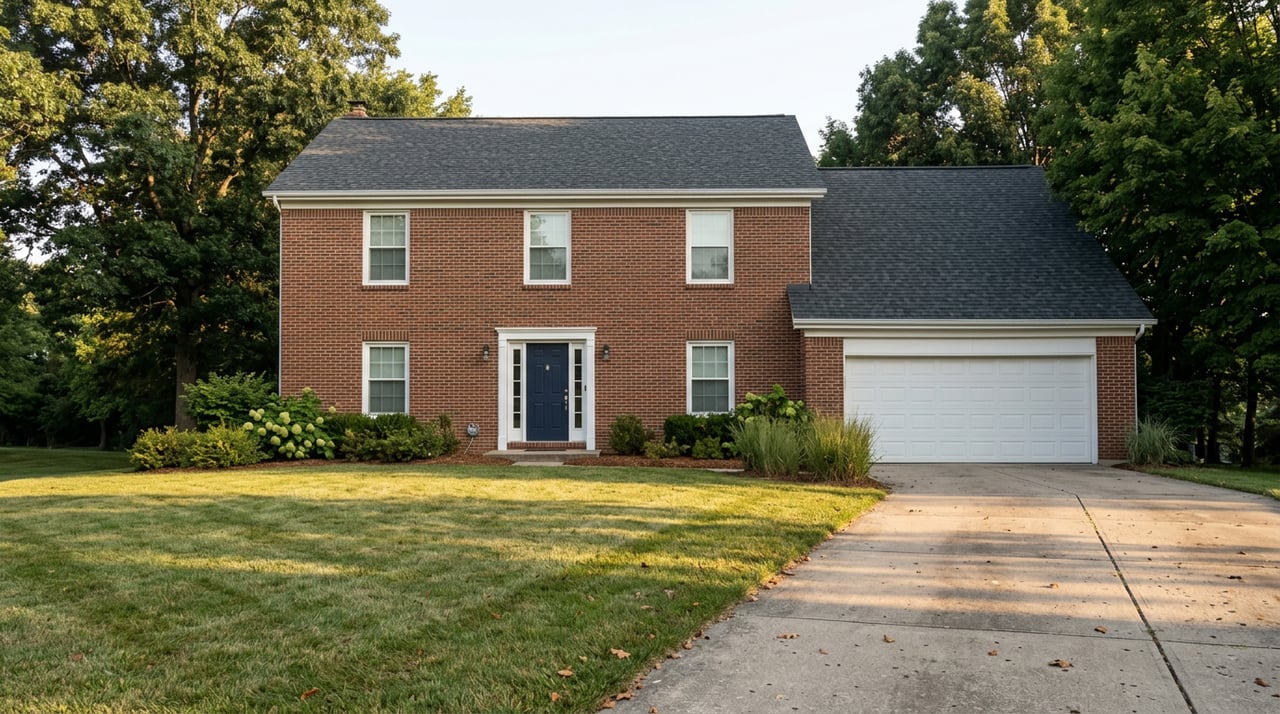
You sit down at a model home in Northstar or Kintner Crossing, coffee in hand, and the sales representative slides a purchase agreement across the table. It looks familiar enough. There is a price, a closing date, a place for your signature and a line for your deposit. If you have bought a resale home in Ohio before, your instinct is to treat this the same way: put down one or two percent, know it sits safely in an escrow account, and expect it back if something falls apart during inspection or financing.
That instinct is the mistake. In Sunbury right now, where new construction makes up a real share of what is closing, the deposit you are about to sign is not earnest money in the way Ohio law defines it. It behaves differently, it is held differently, and the protections that cover a resale buyer's deposit often do not reach it at all.
Why This Matters More In Sunbury Than It Used To
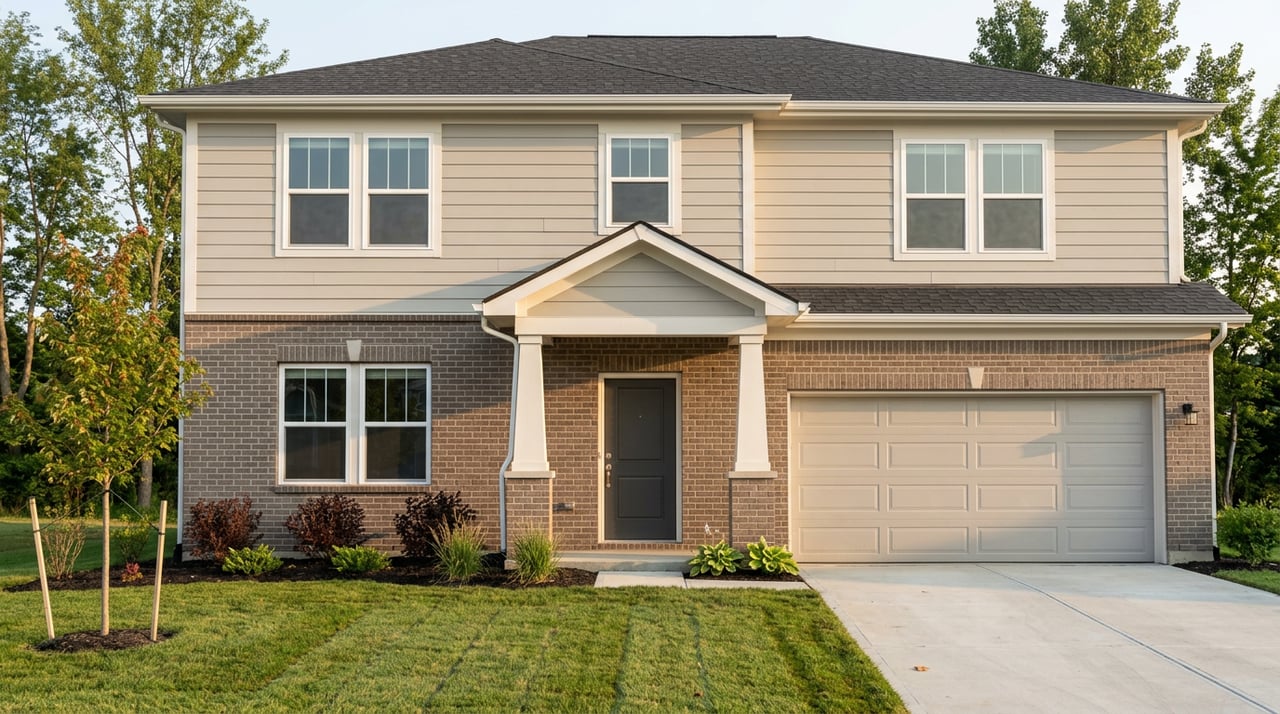
Sunbury sold 287 homes in July 2026, up from 113 a year earlier, and the typical listing took 120 days to move, up from 64 days the previous July. That is a market absorbing a lot more volume at a slower pace, which is exactly what happens when new-construction communities carry more of the closings. Northstar, an 1,800-acre master-planned community stretching across Sunbury, Berkshire Township and Kingston Township, is one of the biggest reasons why. Fischer Homes' original Masterpiece Collection there sold out and rolled into a new phase, Goldwell at Northstar, built around low-maintenance ranch plans. D.R. Horton is working through Kintner Crossing and Towns at Kintner Crossing with a city-approved plan for 81 single-family patio homes and 107 townhomes. Del Webb Explore, Magnolia Park and Price Ponds round out the list of active subdivisions buyers are touring right now.
Every one of those builders writes its own contract. None of them are writing a standard Ohio resale purchase agreement with the deposit terms you might expect.
Your Deposit Isn't Called Earnest Money For A Reason
On a resale purchase in Ohio, a deposit in the range of one to three percent of the price is typical, and it is written into a purchase agreement that a licensed broker administers. New construction runs on a different scale. Builder deposits commonly land between one and five percent of the purchase price, and on a custom or higher-end build that figure can climb toward ten percent. The gap is not cosmetic. A two percent deposit on a $450,000 resale home is $9,000. A five percent builder deposit on a comparably priced new build is $22,500, and a ten percent custom-build deposit on that same price is $45,000, money that is committed months, sometimes close to a year, before the home is finished.
The bigger difference is not the size of the number. It is who is holding it.
Ohio Revised Code 4735.24 tells a real estate broker exactly how to hold your earnest money, when to release it, and what happens if the two sides disagree. It says nothing about a builder holding a deposit directly, because in that scenario there is no broker standing between you and the funds.
That statute requires a broker to keep earnest money in a trust or special account according to the purchase agreement, and if a dispute arises, it sets a clock: the broker generally has to return the money to the buyer within about two years unless the parties agree otherwise or a court case is filed. That framework exists to protect a resale buyer's deposit. When a builder collects a deposit directly instead of through a broker's trust account, that specific statutory backstop is not the mechanism doing the protecting. Your protection becomes whatever the builder's own contract says, in writing, about refunds and forfeiture.
That is the sentence worth reading twice before you sign anything at a Sunbury sales office.
One Inspection Contingency Doesn't Cover A Nine-Month Build
A resale purchase agreement typically gives you one inspection window, and if the home fails to meet expectations, you can usually renegotiate or walk away with your deposit intact under the contract's contingency terms. New construction unfolds over months, not days, which means a single inspection at the end misses almost everything that matters.
The buyers who do this well in Sunbury are the ones who ask for inspection access at multiple stages, not just the final walk-through. A pre-drywall inspection, done while framing, plumbing, electrical and ductwork are still exposed, catches problems that are expensive or impossible to fix once the walls close. You are also still entitled to hire your own independent inspector rather than relying solely on the builder's internal quality checks, though this has to be requested and, in some cases, negotiated into the contract rather than assumed.
Here is how the two paths compare in practice:
| Typical resale purchase | Typical new-construction purchase | |
|---|---|---|
| Deposit size | 1 to 3 percent of price | 1 to 5 percent typically, up to 10 percent on custom builds |
| Who holds it | Broker, in a trust account | Often the builder, directly |
| Inspection structure | Single contingency window | Multiple phase inspections, often buyer-initiated |
| Warranty | Whatever the seller discloses | Builder-specific, varies widely by company |
| Timeline risk | Weeks to closing | Months, sometimes a year, to closing |
What To Get In Writing Before You Sign
A builder's advertised starting price is a floor, not a quote. Lot premiums, elevation choices, structural upgrades and included-features lists all move the real number, and the only figure that matters is what is written into your signed contract and its accompanying spec sheet. Before you sign at Northstar, Kintner Crossing, Del Webb Explore or any other Sunbury community, ask for these in writing:
- Exactly what percentage the deposit is, and whether it is held by the builder directly or by a broker in trust.
- The specific conditions under which the deposit is refundable versus forfeited, including what happens if your financing falls through no fault of your own.
- Whether you retain the right to hire your own independent inspector, and at which build stages you can exercise it.
- What the warranty actually covers, how long each layer of coverage lasts, and whether it transfers if you sell within the coverage period.
- A written range, not a fixed date, for the build timeline, especially if you are coordinating the sale of a current home or the end of a lease around it.
The Build Timeline Is Its Own Kind Of Risk
A resale closing is measured in weeks. A new build in a community like Goldwell at Northstar or a later phase of Kintner Crossing is measured in months, and that gap creates a problem resale buyers rarely have to plan for: what happens to your current housing situation while you wait. If you are selling an existing home, renting month to month, or trying to time a school year around move-in, a builder's estimated completion window sliding by six or eight weeks is not a minor inconvenience. It can mean a temporary rental, a bridge loan, or a gap between when your old home closes and your new one is ready. None of that is covered by the deposit conversation, but all of it should be part of the same conversation before you sign.
A Few Questions Worth Asking Directly
If I back out for a reason my contract doesn't protect, do I lose the whole deposit? Usually yes. Builder contracts spell out forfeiture conditions, and unlike a resale contingency, there is often less room to negotiate after the fact. Read the cancellation clause before you sign, not after you want to use it.
Does Ohio's earnest money law protect a deposit I paid directly to a builder? Not in the same way it protects a broker-held deposit. Ohio Revised Code 4735.24 governs how a broker maintains and disburses earnest money. A builder holding funds directly is operating under the terms of its own contract, so that contract is where your protection actually lives.
Do I still need my own inspector if the builder already inspects the home? Yes. A builder's internal inspection confirms the home meets the builder's own standard. An independent inspector you hire works for you, and that distinction matters most at the pre-drywall stage, before anything gets covered up.
Buying new construction in a growing community like Northstar or Kintner Crossing can be a genuinely good move, but it is a different transaction than a resale purchase, not a variation on one. The Linda Rano Jonard Team has spent decades walking Central Ohio buyers through exactly these differences, from the first builder appointment through the final punch list. If you are considering a new build in Sunbury and want someone in your corner before you sign, request a free consultation and let's go through the contract together.