A seller sits down with a stack of comps that all point to the same number. Homes down the street sold in the $400s. The house looks good. The price feels right. Then the showings don't come, or they come and go quiet, while two miles away a builder is closing homes for more money and doing it faster. It's tempting to read that as bad luck, or a bad agent, or a house that just isn't special enough. It's actually something more specific: the resale home isn't losing to another house. It's losing to a financing offer the seller never saw.
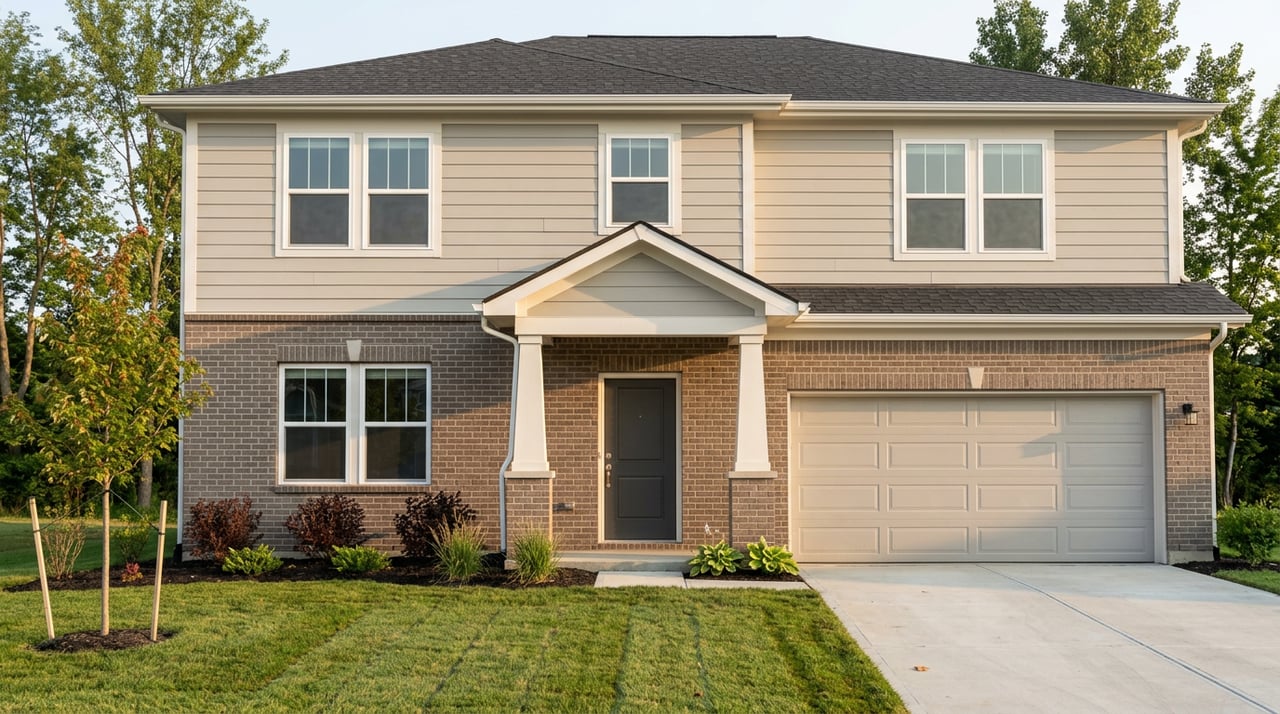
Sunbury right now has an unusual concentration of active builder communities for a town its size. Kintner Crossing and Towns at Kintner Crossing, both being built by D.R. Horton, together bring 81 single-family patio homes and 107 townhomes to a single corridor off Cheshire Road. Northstar, an 1,800-acre master-planned community stretching across Sunbury, Berkshire Township, and Kingston Township, has multiple builders working simultaneously, including Fischer Homes at Ivy Wood at Northstar, along with Del Webb, AMH Living, M/I Homes, and Manor Homes. Add Skybrook, Price Ponds, and Magnolia Park, and a resale seller in Sunbury is competing with more than half a dozen active sales offices, not a handful of private sellers.
What The Builders Are Actually Selling At
Here's the current price map, based on builder-published pricing and the community's own development filings as of this spring:
| Community | Builder(s) | Typical 2026 price band |
|---|---|---|
| Kintner Crossing & Towns at Kintner Crossing | D.R. Horton | $352,990 (townhomes) to $447,990+ (single-family) |
| Ivy Wood at Northstar | Fischer Homes | Low $400s to mid-$700s |
| Northstar (broader community) | Del Webb, AMH Living, M/I Homes, Manor Homes | Roughly $400,000 to $650,000+ |
| Del Webb Explore | Del Webb (active-adult product) | Upper $300s to low $400s |
| Price Ponds | Builder varies by lot | Mid-$400s |
| Magnolia Park | Builder varies by lot | High $500s |
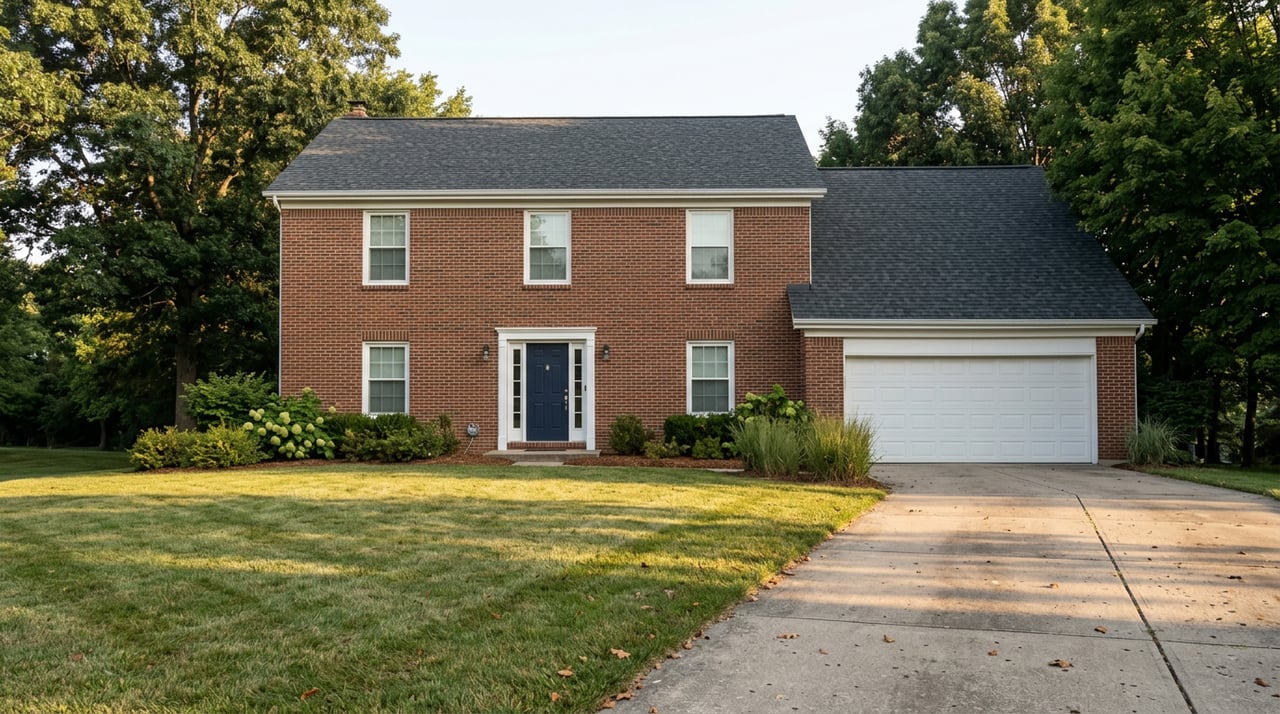
That's a real spread, from entry-level attached homes to move-up detached product well into the $600s and $700s. A resale seller pricing a three-bedroom colonial at $420,000 isn't just up against the neighbor's similar house. They're up against six sales offices that can structure a deal in ways a private seller can't.
The Gap That Looks Backwards Until You See The Mechanism
County MLS data from March 2026 put the resale median sale price in Sunbury at $390,000, while the median list price on new construction sat at $519,900, with only 1.3 months of new-home inventory on the ground. Read quickly, that looks like new construction is simply out of reach for anyone shopping resale, and that resale sellers should feel confident their homes are the more affordable, more attainable option in town.
That confidence is misplaced. A builder with 1.3 months of inventory isn't sitting on unsold homes. They're moving product fast, at a price nearly $130,000 above the resale median, and they're doing it because the sticker price isn't what the buyer is actually shopping on. Buyers walking into a builder's sales office aren't comparing purchase prices. They're comparing monthly payments, and builders have a lever resale sellers don't: the interest rate itself.
What A Rate Buydown Actually Does To The Math
Fischer Homes' own financing disclosure for select quick move-in homes offered an FHA 30-year fixed rate of 4.750 percent, an APR of 5.497 percent, producing a monthly principal, interest, and mortgage insurance payment of $2,335.64 on a loan amount of $412,382. That offer was tied to a specific rate lock date in December 2025, and terms like this shift by community and by month, but the mechanism behind it doesn't change: builders can buy down a buyer's rate using their own capital or a lender relationship, in a market where Rockford Homes describes prevailing 2026 mortgage rates as running roughly 6 to 6.5 percent.
A rate gap of a percentage and a half or more, applied to a loan in the low $400,000s, changes the monthly payment by hundreds of dollars. A resale seller who cuts $20,000 off their asking price to compete on paper hasn't moved the needle nearly as far as a builder who buys the rate down by a point and a half. The resale seller is fighting the wrong battle. The comp sheet says price. The buyer's spreadsheet says payment.
Why Sunbury's Sales Numbers Look Hot While Resale Feels Quiet
There's a second layer to this that trips sellers up even more, and it shows up in the district-level sales data. Columbus REALTORS' June 2026 market report showed Big Walnut Local School District, which covers Sunbury, posting 41 closed sales for the month, up 46.4 percent year over year, one of the strongest growth rates of any district tracked in Central Ohio that month. Read on its own, that number says the Sunbury market is on fire.
But that district boundary captures every closing inside it, new construction and resale alike. When six builder communities are closing dozens of homes a quarter inside the same school district, the district's total sales count climbs even if resale activity stays flat or softens. Meanwhile, county MLS figures on resale-only transactions in Sunbury for March 2026 showed just 7 homes sold that month, a median price of $390,000 down sharply from the year before, and an average of 122 days on market compared to 87 days the prior year. That's a small sample, small enough that one or two unusual sales can swing the median hard, so it deserves a grain of caution rather than alarm. But it points the same direction as everything else here: the district-wide growth headline and the resale-specific slowdown are both true at the same time, because they're measuring different things.
"June is when central Ohio's housing market truly comes alive," said Gloria Alonso Cannon, 2026 President of Columbus REALTORS, describing a Central Ohio market where new listings held steady and closed sales rose across the region.
That's a genuine seasonal strength in the broader market. It's just not evenly distributed between the builder floor and the resale listing two streets over.
What A Resale Home Still Has That A Model Home Doesn't
None of this means a resale seller is stuck. It means the pitch has to change. A few things a builder cannot offer, no matter how good their financing is:
- Mature trees and an established yard, not sod laid three months ago
- A finished basement or built-out storage that's already been lived in and tested, not a spec plan
- A closing timeline measured in weeks, not the four to six months typical of a production build after permits
- Systems, fixtures, and mechanicals with an actual track record in that specific house, not a warranty booklet
- Room to negotiate price and terms directly, without routing every concession through a builder's corporate incentive calendar
The sellers who do well against this kind of builder competition are the ones who stop trying to out-discount a company with a financing department and start selling what a spec home can't replicate.
Getting An Appraisal To See It Your Way
This is where the friction actually shows up at the closing table. When a new-construction sale closes with a heavy rate buydown or a builder-paid closing cost credit baked in, that concession is supposed to be backed out of the comparable sale price before it's used to value another home. In practice, not every appraisal captures that cleanly, especially when a builder's community is the newest, most visible set of closings in the area. A resale seller whose home gets compared against an unadjusted builder sale can end up valued against a price that was never really the price.
This is exactly the kind of detail we walk sellers through before a listing goes live, pulling the right comps, documenting what builder concessions actually cost versus what they were advertised as, and making sure an appraiser working the file has the full picture, not just the headline number from the community up the road.
A Few Common Questions
Does a builder's incentive-heavy sale count as a real comp against my home? It can, but only after the concession is properly backed out. A sale that closed at $460,000 with a builder-funded rate buydown worth $15,000 to $20,000 in value isn't really a $460,000 comp. Getting that adjustment right is worth raising directly with your agent and your appraiser before it becomes a problem.
Why does the school district look busy if resale is actually slow? Because district-level sales counts include every closing inside the boundary, new construction and resale together. A wave of builder closings in Kintner Crossing or Northstar can lift the whole district's numbers even while resale-only activity holds steady or softens.
Should I just wait until builder inventory clears out? Not necessarily. With only about 1.3 months of new-home inventory reported this spring, these communities aren't sitting unsold, they're building and closing new phases continuously. Timing a resale listing around a builder pause isn't a reliable strategy on its own.
Can I actually compete with a rate buydown as a private seller? Not dollar for dollar, but you can compete on total cost of ownership and timeline. A faster close, established landscaping, and a home with no construction punch list left to finish all carry real value to a buyer doing the math past the interest rate.
If you're weighing a listing in Sunbury and want a clear read on what's actually competing against your home right now, not just the last few comps, the Linda Rano Jonard Team can walk you through the current builder landscape, what it means for your pricing, and how to position your home against it. Request a free home valuation and consultation, and let's build a strategy around what your house does better than a spec plan ever will.